Sierra de Aracena · Doñana · Huelva
Learn Spanish where nobody speaks English
Seven days in western Andalusia with the people who actually live there. A village school. A marsh at first light. A very long lunch.
Why this is not a language course
You won’t visit a school. You’ll spend the morning in one.
Most Spanish immersion weeks are a language school with excursions attached. Most Andalusian tours are a coach, a guide holding a flag and a flamenco show booked for the group. The difference here is not tone or branding — it is who you spend the seven days with.
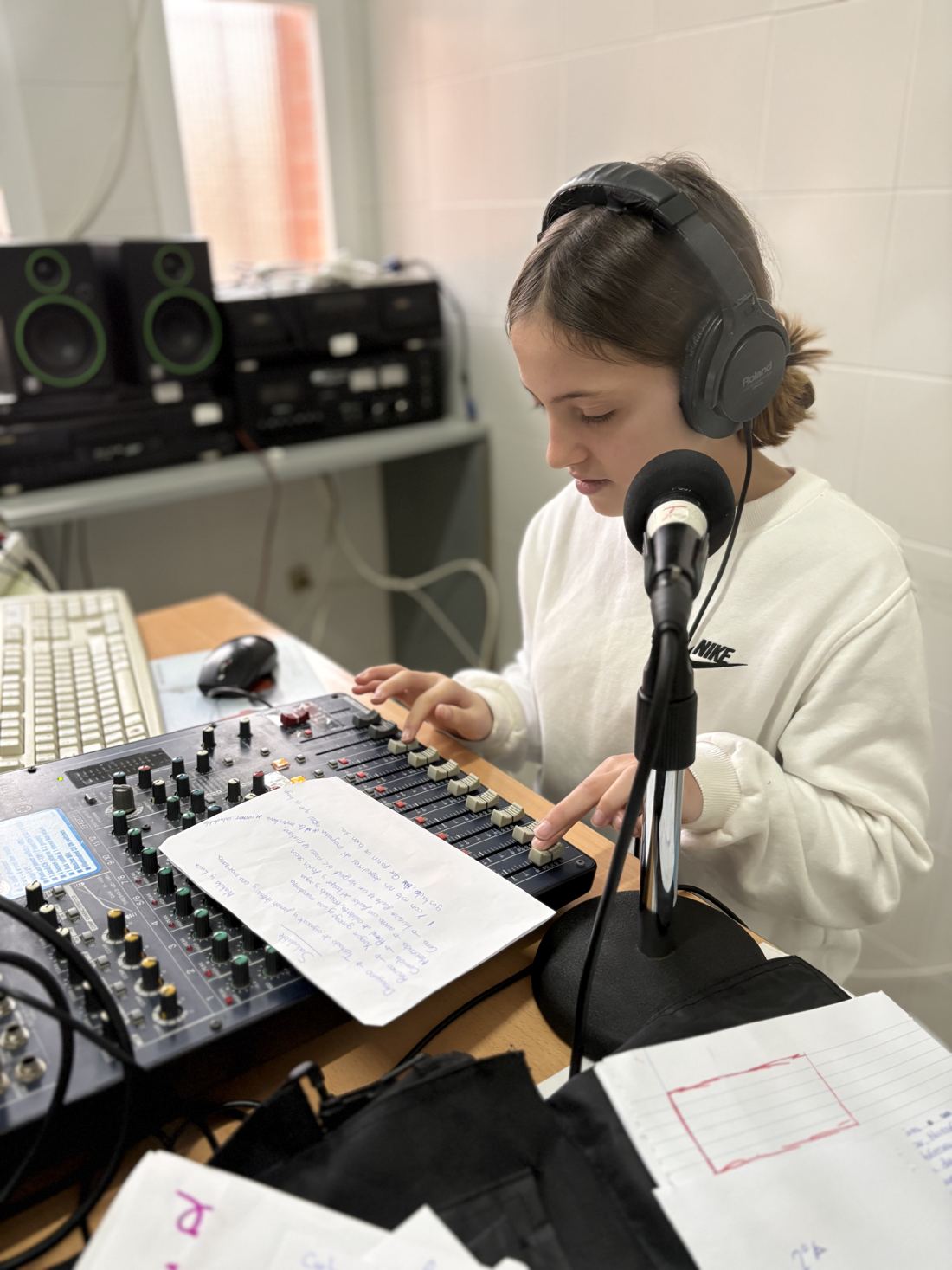
One morning of your week happens inside Cortegana’s state schools: a primary school and a secondary school, both of them ours to walk into, because we have been working in them for years. At the secondary school you go on the student radio — teenagers interview you in Spanish, you interview them in English, and everybody is equally nervous. On Thursday afternoon those same kids turn up at the village casino to beat you at cards.
This is not a cultural activity arranged for visitors. It is a language exchange that already runs — you are simply the other half of it.
A village with a board-game culture
Not snakes and ladders: modern designer board games, cooperative and language-rich, run with the local association Chinchimonete. Cortegana is unusual in Spain for this — every autumn the village hosts Jamón Jugón, a board game and role-play festival that draws close to two thousand people.
Games are the perfect language activity: you have to talk, and nobody notices they are learning.
The week
From the mountain to the marsh
Two days in a chestnut village in the Sierra de Aracena, three on the sand streets of El Rocío at the edge of Doñana, two on the Atlantic. Most operators sell one of the three. This programme sells the journey between them.
Arrival and the castle
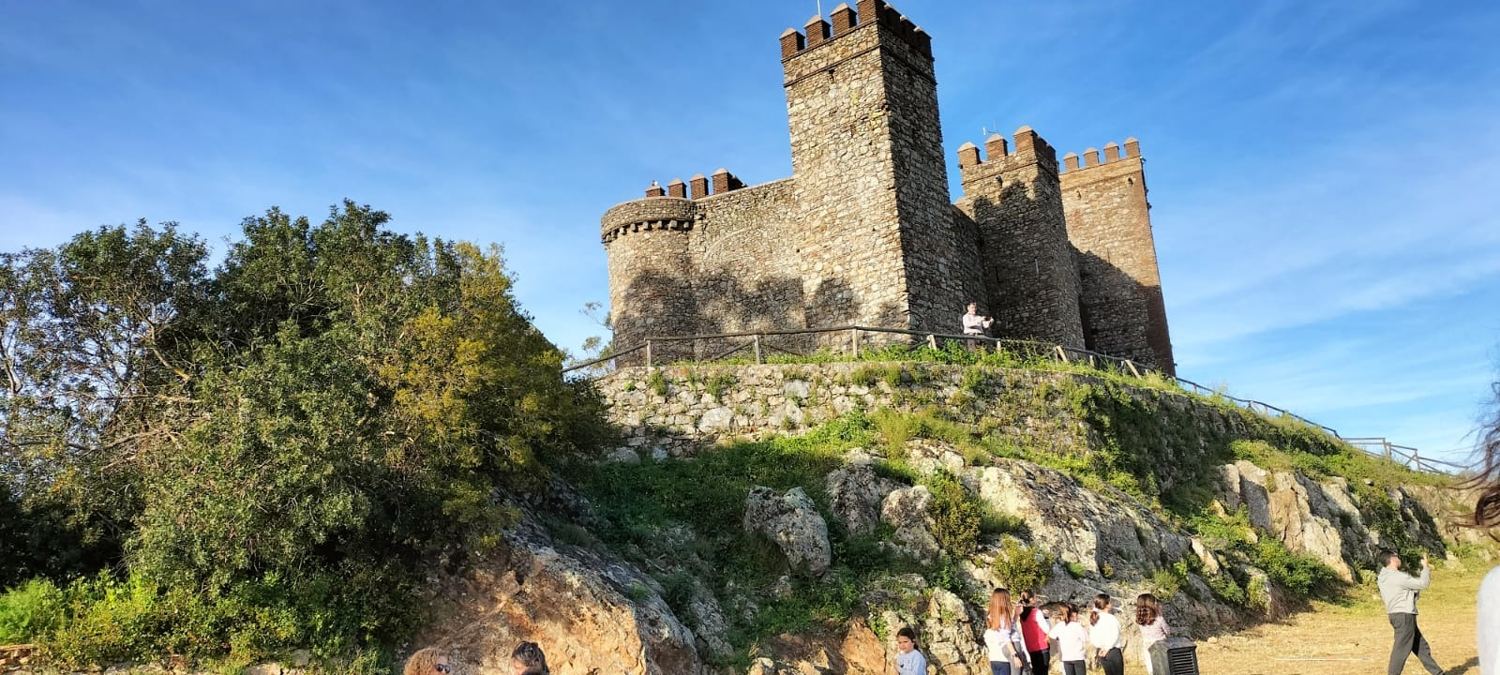
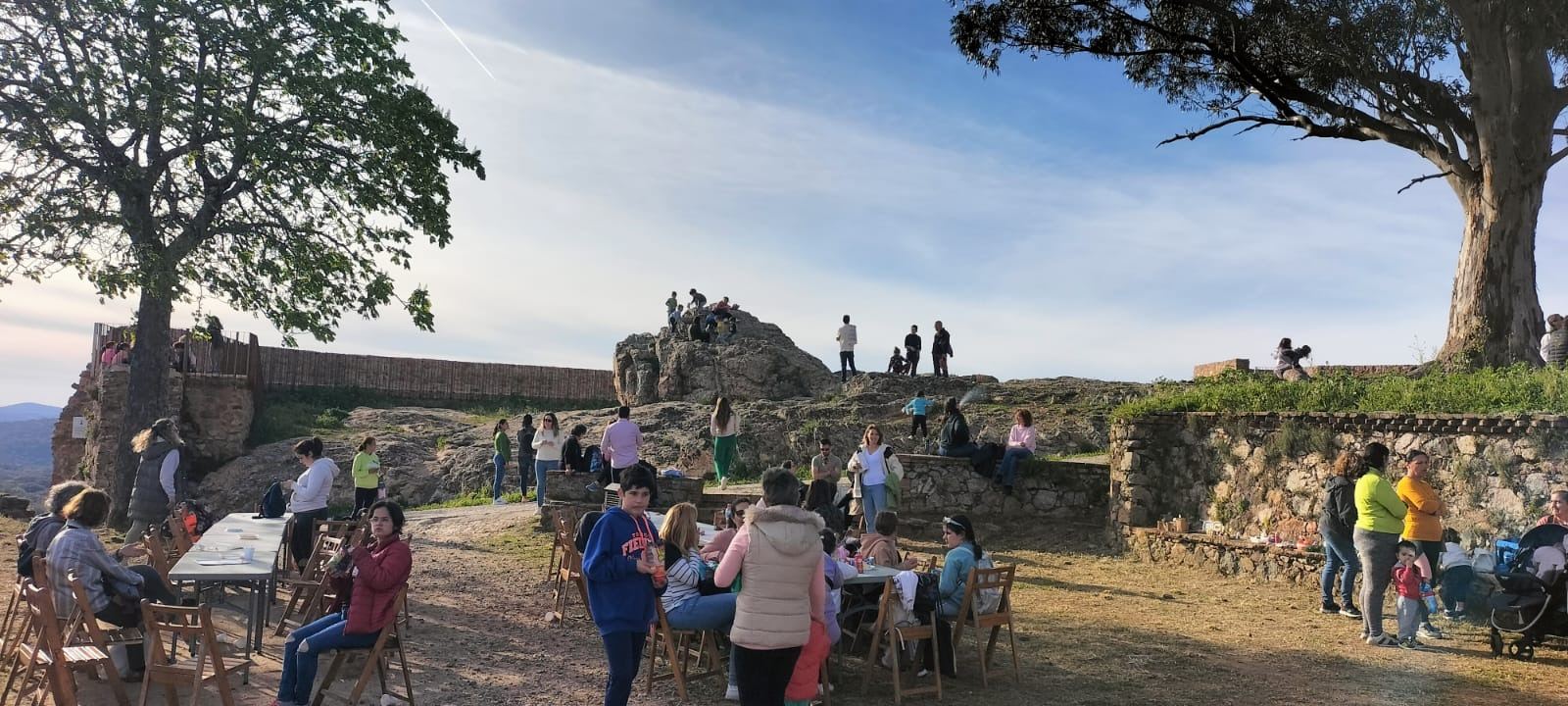
A guided walk up through Cortegana to its 13th-century castle, part of the frontier line that defended Seville against Portugal. On the way, the Casa Estrada: a neo-mudéjar house of tiled arches and stained glass, built by an emigrant who came home rich, and the last thing anybody expects in a mountain village.
The schools, and the still
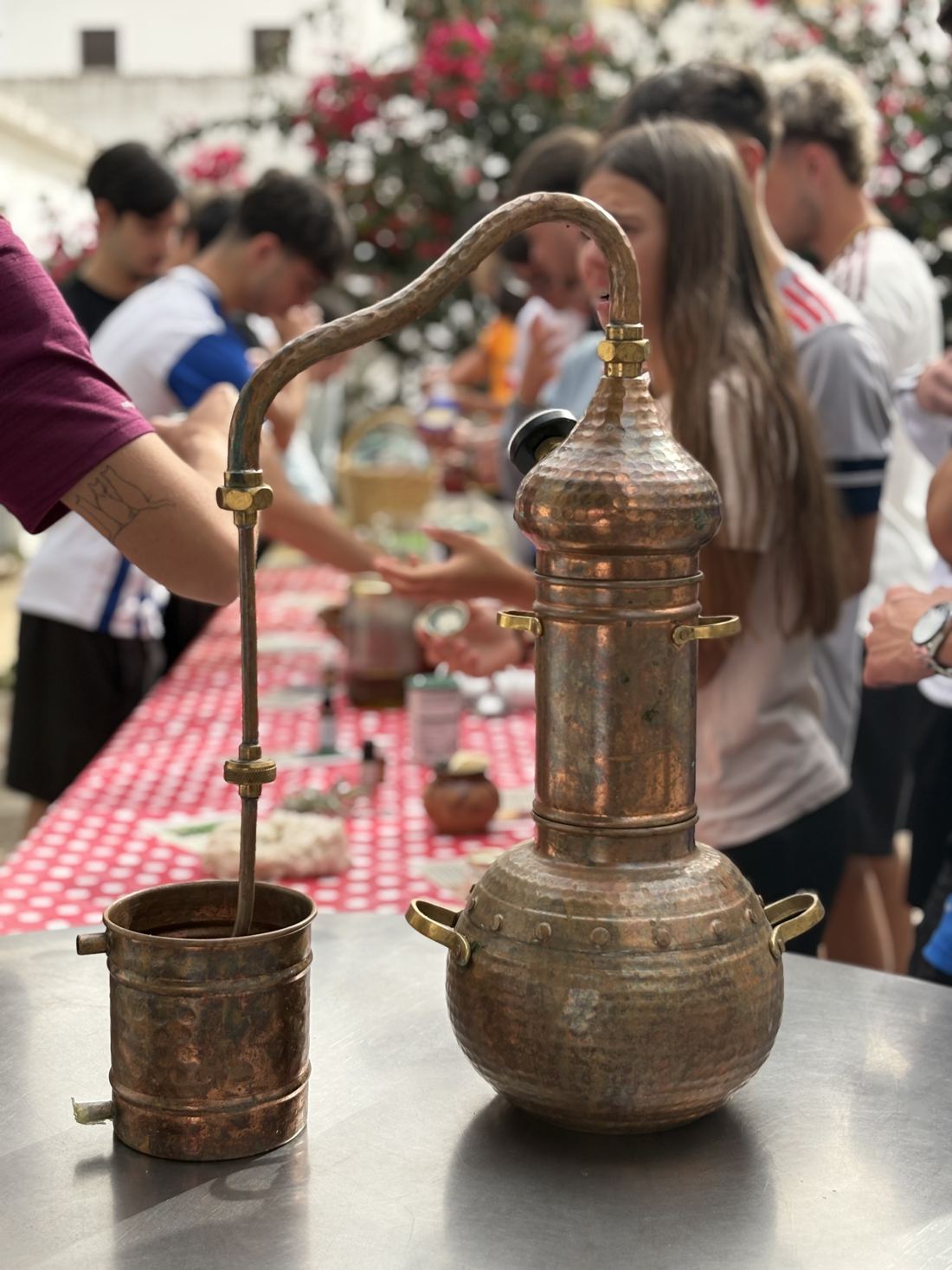
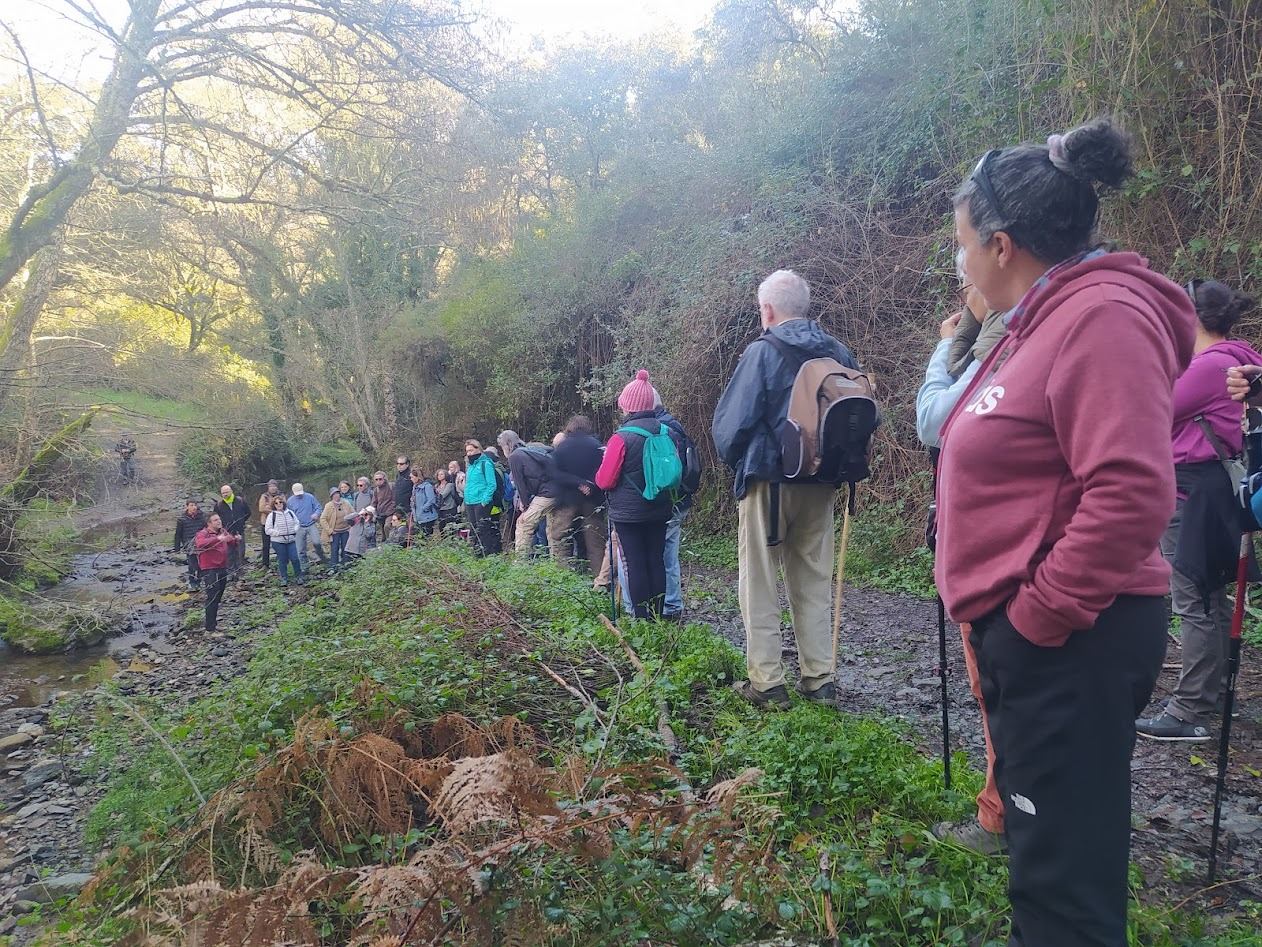
Morning in the primary and secondary schools. In the afternoon, four kilometres along the Chanza river and the aromatic and medicinal plants workshop with the Adelfas women’s association: identifying the flora of the dehesa, distilling it in a copper still, and making the balms and soaps that go home in the suitcase.
Aracena, and the road south
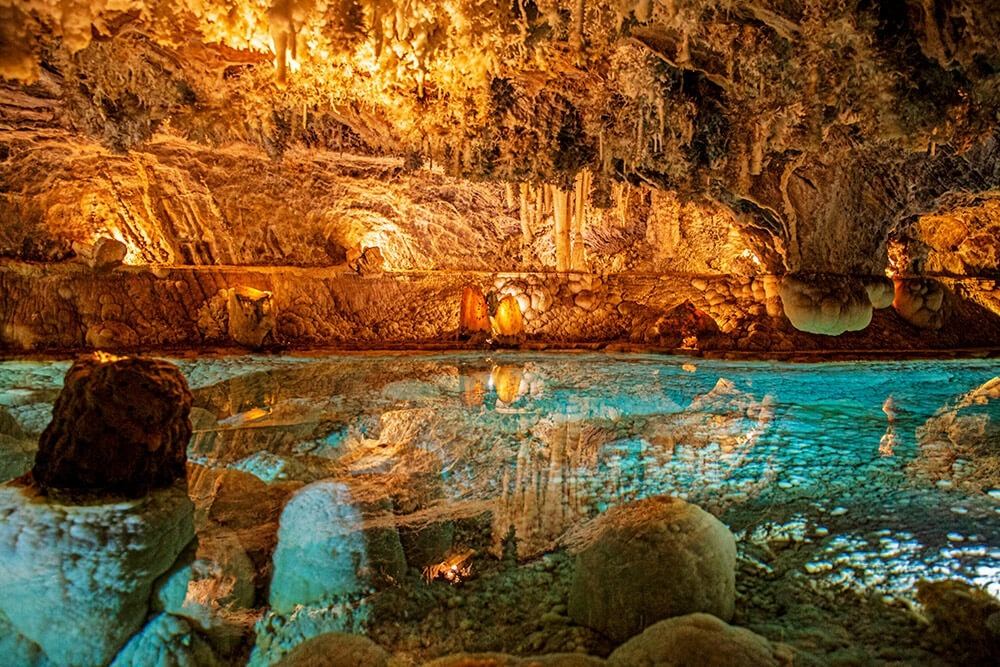
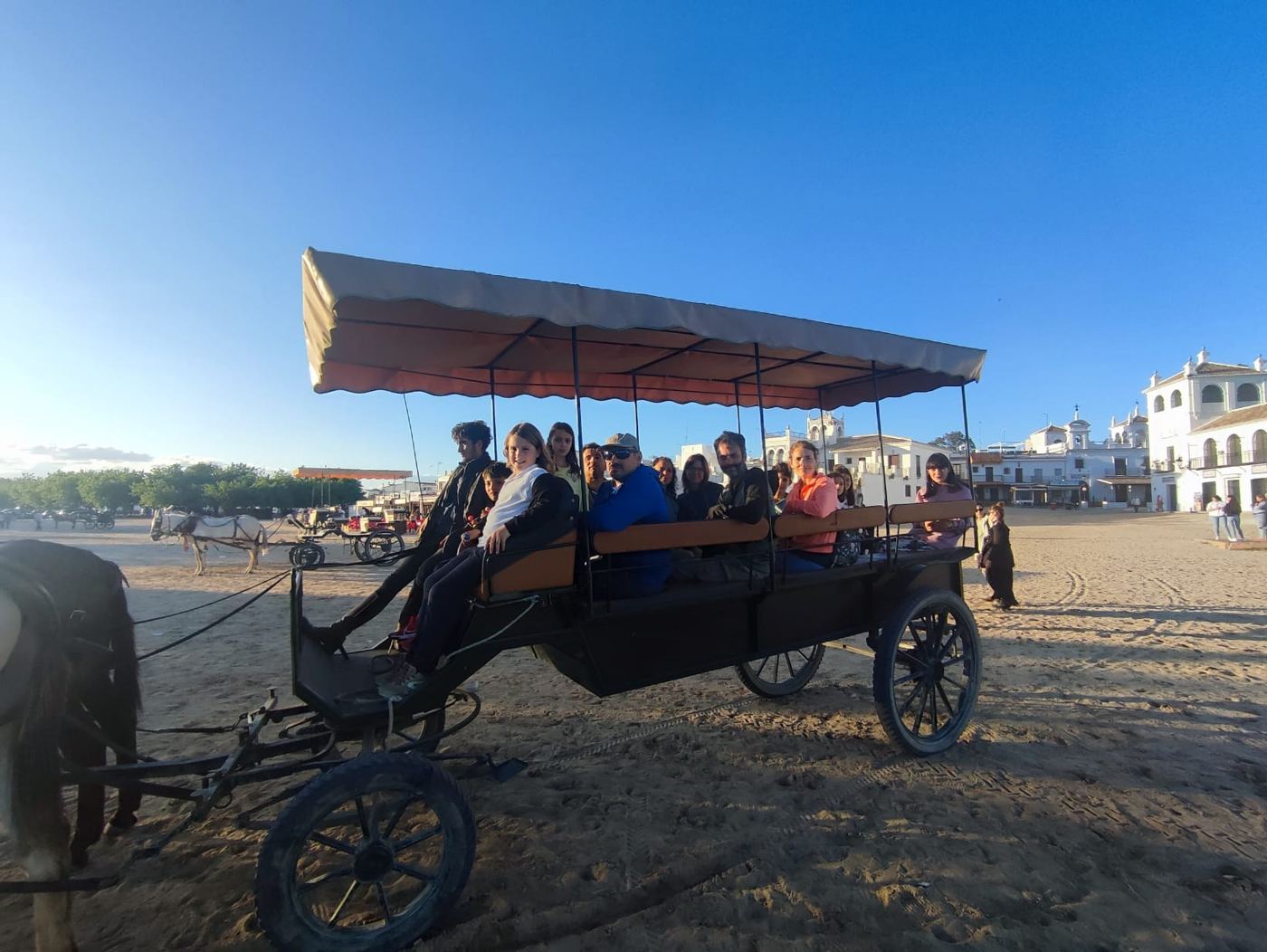
The Gruta de las Maravillas, a karst cave of galleries, lakes and underground watercourses, and lunch in Aracena. In the afternoon the landscape changes entirely: we drive to El Rocío and walk the aldea at dusk, when the horses come back down the sand streets. There is no tarmac in El Rocío, and after ten minutes nobody is looking at their phone.
Inside Doñana
Four hours across the national park by 4×4 with the authorised operator, or the Acebrón and La Rocina trails on foot, which are quieter and better for birds. Carriage ride in the afternoon. In the evening, a flamenco workshop run by us — not a hired act: percussion, palmas and cante, built around the fandangos de Huelva. Everyone plays; nobody watches.
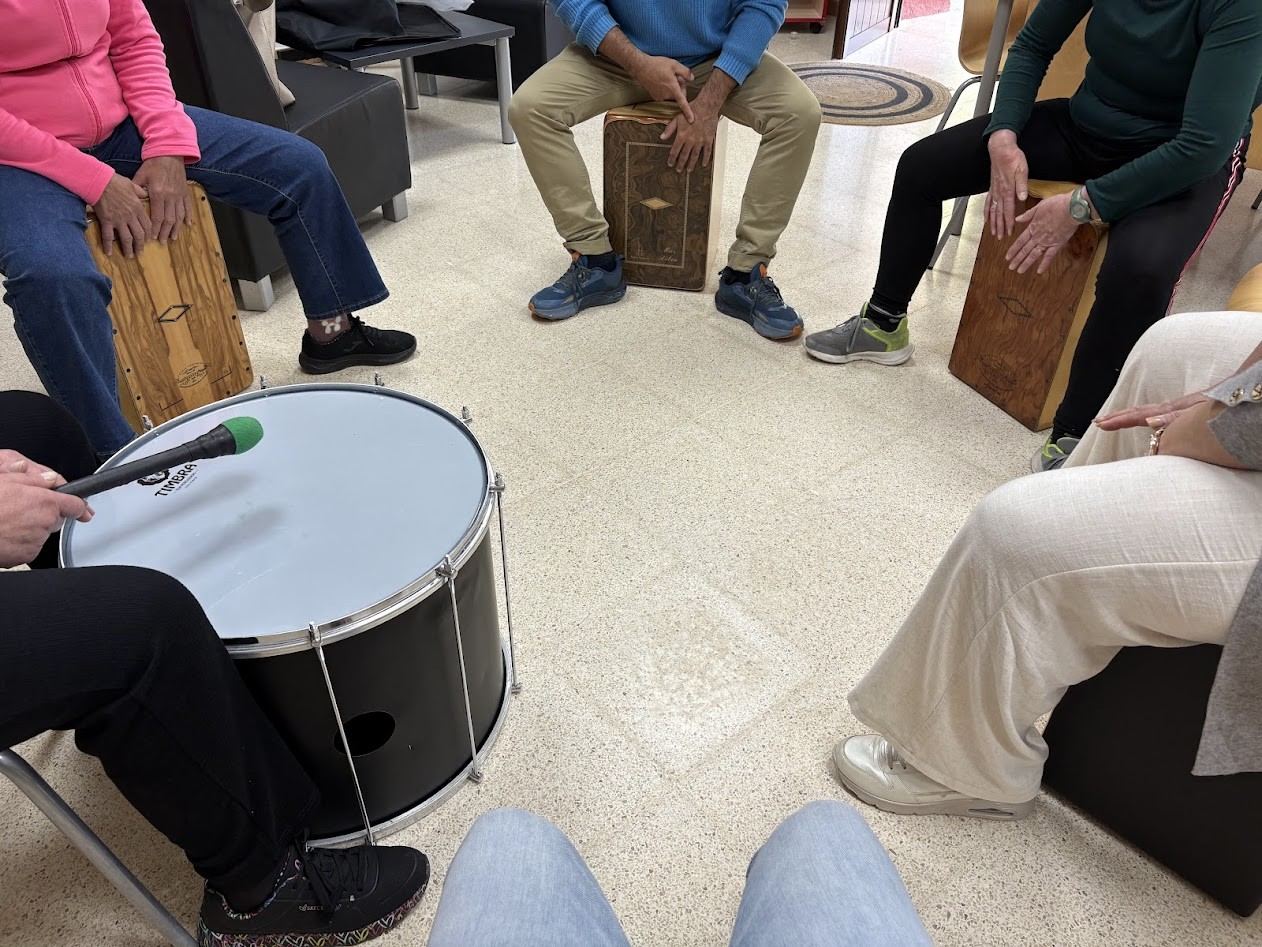
The marsh at first light
Early birdwatching from the hides over the marismas — spoonbills, flamingos, herons and, in the migration months, the species that make Doñana one of the most important wetlands in Europe. Free afternoon in the village.
Learning to sail
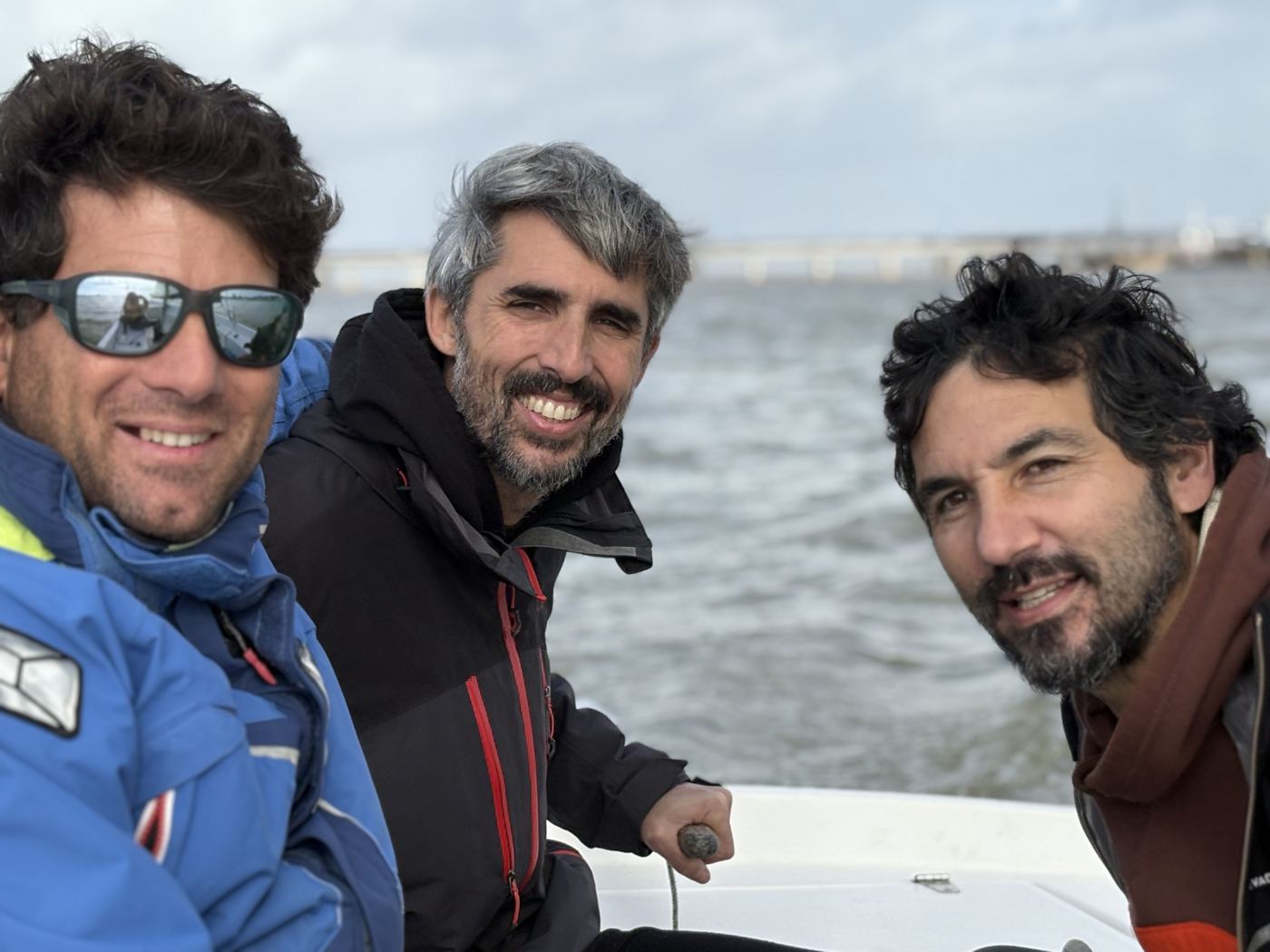
An introduction to sailing with Amura Wind & Surf, from their base at El Portil. Five participants per boat with a qualified instructor, so everybody takes the tiller. Amura is a nautical school built around sustainability and environmental education, not a rental desk — the session includes reading the wind, the tide and the estuary itself.
The sand spit, and home
An interpreted trail through the Marismas del Río Piedras y Flecha del Rompido, protected since 1989, where a sand spit grows westward across the river mouth by thirty to fifty metres every year. Dunes, salt marsh and scrub in one short walk. Transfer to Seville in the afternoon.
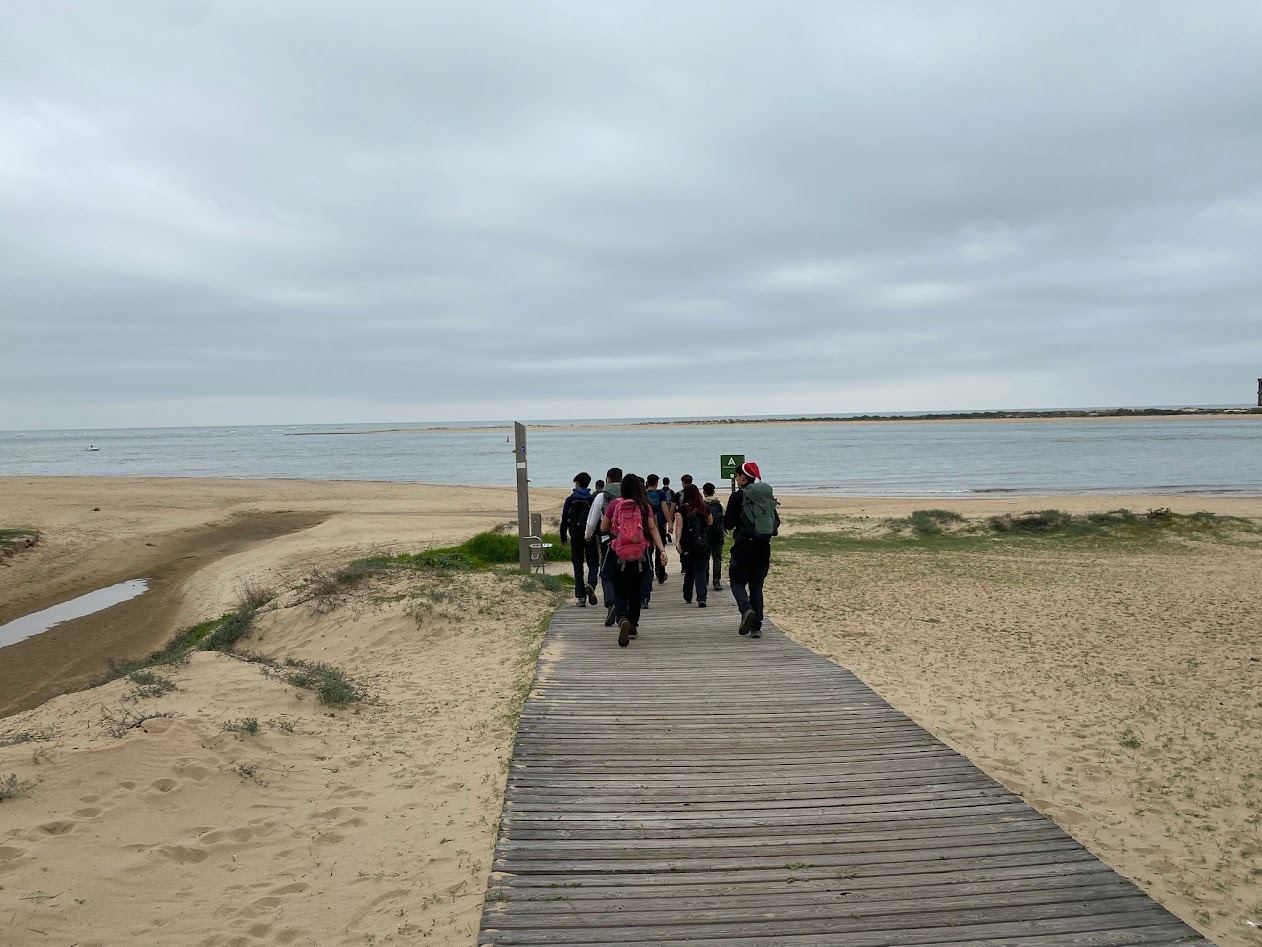
Every landscape is first told — its history, its people, the story of why a village sits where it does — and then done. Interpretation gives the frame; practice is what fixes it.
Who comes
Three kinds of people, one table
Adults who have been studying Spanish for years
Intermediate, patient, tired of apps and evening classes, and ready to spend a week being understood by strangers.
Birdwatchers
Doñana and the Odiel marshes in the migration months, with a guide who can name what you are looking at in both languages.
Walkers and slow travellers
Chestnut woods, dehesa and dunes, at the pace of people who stop to look at things.
The welcome
Two local companies, not a booking desk
Aldea Educativa and Amura Wind & Surf are both small companies rooted in this province. We live here, and the people guiding the week are the people who own it. Groups are received as guests rather than clients — the same table, the same evenings, the same associations we work with all year round.
By the third day most participants have stopped behaving like visitors. That is the whole ambition: that for one week this place is their house too.
Money, plainly
What you pay us for, and what you book yourself
The programme fee covers
- Seven days of guiding and language accompaniment, in Spanish
- Both school sessions, arranged and prepared
- The plants workshop, the board games session and the flamenco evening
- Guided visit to Cortegana castle and the Gruta de las Maravillas
- Sailing initiation with Amura Wind & Surf
- The interpreted trail at the Flecha del Rompido
- All ground transport, including Seville airport transfers
You book directly, we send you the links
- Your rooms — Hotel Sierra Luz in Cortegana, a casa rociera in El Rocío and a hotel in Punta Umbría
- Meals, apart from those named in the programme
- The Doñana 4×4, booked with the authorised park operator
- Flights and travel insurance
Write with your dates and group size and we will send you a full quotation. Travel agencies and tour operators: we work as the local supplier in destination — net rates on request.
Who runs this
Isabel Menguiano
I run Aldea Educativa, a small socio-educational company based in the Sierra de Aracena. For years I have taken groups through Doñana and these mountains — schools, families, teachers — and worked inside the classrooms you will be visiting.
There is no office and no sales team. You will be talking to me from the first email to the last day, which is also why there are only twelve to fifteen places.
Next dates
Tell us when you can come
Write with your dates, your group size and roughly how much Spanish you have. We will tell you honestly whether the week is right for you — and if it isn’t, we will say so.
Programme of accompaniment and language immersion, in partnership with Amura Wind & Surf. Accommodation and national park access are contracted by the participant directly with each provider.

